
Description
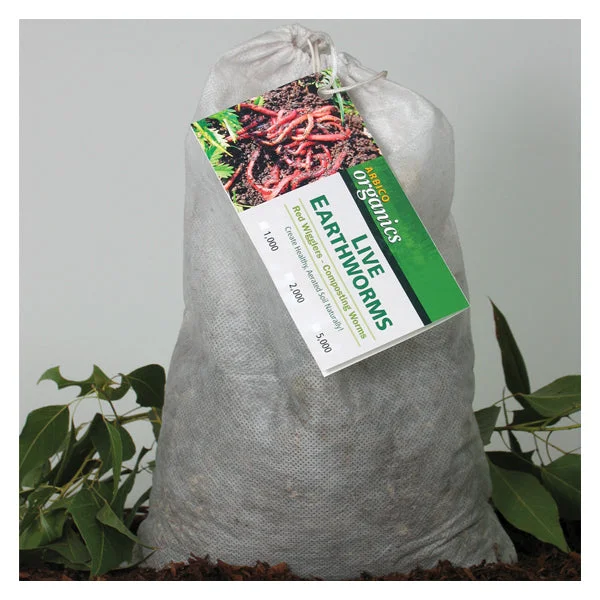
Your soil is either working for you or against you — and live composting earthworms are one of the fastest ways to tip the balance. Drop approximately 1,000 of these tireless underground workers into your beds, bins, or transplant mix and watch your plants respond with deeper roots, richer color, and noticeably stronger growth.
Why Red Composting Worms?
Not all worms are created equal. Our Red Composting Worm Mix combines three elite composting species — Eisenia fetida, Eisenia hortensis, and Perionyx excavatus — each selected for their voracious appetite for organic matter and prolific casting production. They’re raised in clean peat moss and coconut coir bedding and fed specially prepared worm food. No bio-waste. No bio-sludge. Ever. What arrives at your door is healthy, active, and ready to work.
Key Benefits
- Deep Soil Aeration: Worm tunneling breaks up compaction and floods root zones with oxygen — no tilling required.
- Nutrient-Dense Castings: Worm castings deliver a slow-release blend of organic nitrogen, phosphorus, potash, magnesium, and calcium directly to plant roots.
- Mycorrhizal Stimulation: Worm activity promotes beneficial fungal networks that dramatically improve water and nutrient uptake.
- Accelerated Decomposition: Beneficial bacteria in the worm gut break down organic matter up to 5x faster than passive composting.
- Stronger Disease Resistance: A thriving soil food web means more resilient plants with fewer pest and disease pressures.
- Covers ~400 sq. ft.: At 2–3 worms per sq. ft., one order goes a long way in garden beds or raised planters.
Use Cases
- Raised garden beds and in-ground vegetable plots — apply at planting or mid-season to reinvigorate tired soil
- Vermiculture and composting bins — stock a standard tray with ~1,000 worms to process kitchen scraps efficiently
- Hydroponic and coco coir systems — brew worm castings into a tea and apply as a root drench or foliar spray
- Transplant holes — add a handful of worms and castings when transplanting seedlings for a fast-start boost
- Potting mixes — blend castings into your substrate for a living, self-fertilizing growing medium
- Lawn and turf renovation — introduce worms to compacted lawns to naturally aerate and improve drainage
Directions for Use
- Garden Beds / Soil: Apply 2–3 worms per sq. ft. — 1,000 worms covers approximately 400 sq. ft. Moisten soil before releasing.
- Vermiculture / Composting Bins: Use roughly 1,000 worms per square foot of bin surface (one standard tray). Feed with kitchen scraps, cardboard, and coffee grounds.
- Worm Tea: Steep 1 cup of castings in 1 gallon of dechlorinated water for 24–48 hours with an air stone. Apply to roots or foliage every 2–4 weeks.
- Transplants: Place a small handful of worms and castings directly in the transplant hole before setting your plant.
What Growers Are Saying
“I added these to my raised beds in early spring and by week three my tomatoes were already outpacing everything I’d grown before. The soil went from dense clay to something almost fluffy.” — Marcus T., vegetable gardener
“I run a small worm farm and these arrived healthy, active, and ready to go. Zero DOA. Will be ordering again for my second bin.” — Sandra K., vermiculture hobbyist
“Used the castings to brew a tea for my hydro system. My EC dropped and my plants still looked better than ever — the biology in this stuff is real.” — Devon R., hydroponic grower
Note: Testimonials above are placeholders — replace with verified customer reviews from Judge.me or your review platform.
Frequently Asked Questions
How do I know the worms will survive shipping?
Our worms are packed in breathable, insulated packaging with moisture-retaining bedding. They’re shipped to arrive alive and active. If you receive a DOA order, contact us immediately for a replacement.
What’s the difference between the three species in the mix?
Eisenia fetida is the classic red wiggler — fast-reproducing and highly efficient. Eisenia hortensis (European nightcrawler) is larger and great for soil aeration. Perionyx excavatus thrives in warmer climates and processes material quickly. Together they cover a wider range of conditions.
Can I use these in a hydroponic or soilless system?
Not directly in the reservoir, but worm castings brewed into a tea are excellent for hydroponic root drenches and foliar applications. Many growers use them to inoculate coco coir or peat-based substrates.
How soon will I see results?
Most growers notice improved soil texture within 2–4 weeks and measurable plant response within 4–6 weeks, depending on soil conditions and worm population density.
Do I need to feed them after releasing into garden beds?
In an active garden bed with organic matter present, worms will self-sustain. For composting bins, feed regularly with kitchen scraps, cardboard, and coffee grounds to maintain population health.
How many should I order for a large garden?
At 2–3 worms per sq. ft., one order of ~1,000 covers about 400 sq. ft. For larger plots, order multiple units or allow the population to naturally expand over one growing season.
More about Earthworms (Approx 1000):
Supercharge Your Soil with Live Composting Earthworms
Imagine your garden beds teeming with life underground — roots drinking up nutrients effortlessly, soil staying loose and airy, and plants visibly thriving. That’s what approximately 1,000 live red composting worms can do for you.
Our Red Composting Worm Mix features three of nature’s most powerful soil workers — Eisenia fetida, Eisenia hortensis, and Perionyx excavatus — raised in clean peat moss and coconut coir bedding and fed specially prepared worm food. No bio-waste. No bio-sludge. Ever.
What These Worms Do For Your Garden
- 🌱 Aerate soil — their tunneling breaks up compaction and introduces oxygen
- 💧 Boost water uptake — stimulates mycorrhizal growth for better root absorption
- 🧪 Enrich with nutrients — castings deliver organic nitrogen, phosphorus, potash, magnesium, and calcium
- 🦠 Activate beneficial bacteria — accelerates breakdown of organic matter into plant-ready nutrients
- 🛡️ Strengthen disease resistance — healthier soil biology means more resilient plants
How to Use
- Garden Beds / Soil: Apply 2–3 worms per sq. ft. — 1,000 worms covers approximately 400 sq. ft.
- Vermiculture / Composting Bins: Use roughly 1,000 worms per square foot (one standard tray).
- Potting Mix / Transplants: Mix castings into soil or brew into a worm tea solution for established plants.
Whether you’re building a thriving vegetable garden, a hydroponic system, or a backyard compost operation, these worms are one of the most natural and effective investments you can make in your soil.
Reviews
There are no reviews yet.