
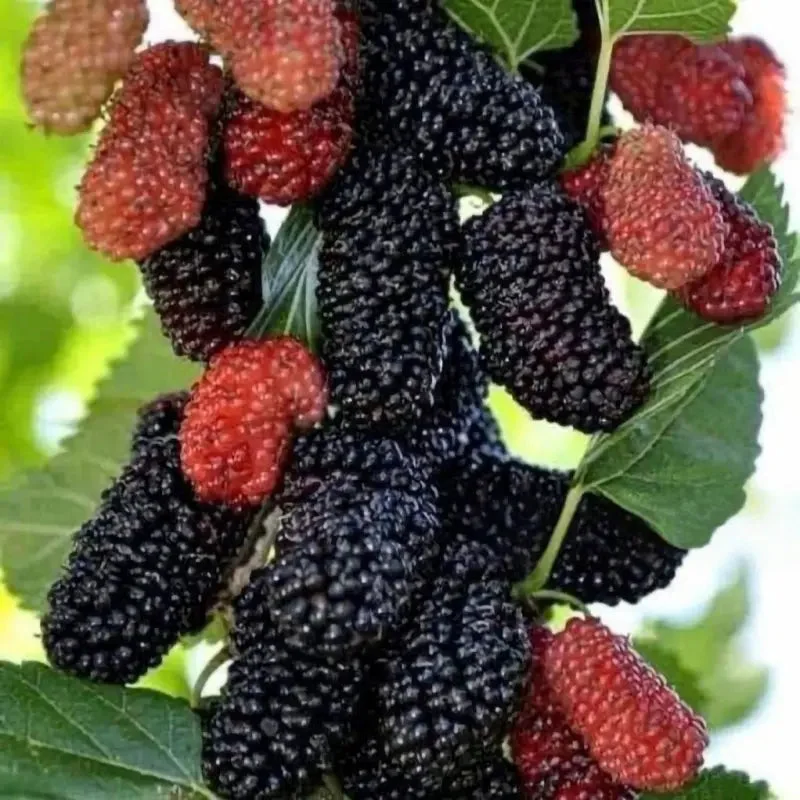
Description
Seed Preparation:
-
Cold Stratification (Optional but Recommended): Place seeds in damp sand or a paper towel inside a sealed bag and refrigerate for 30-60 days to improve germination.
-
Soaking: Soak seeds in room-temperature water for 24 hours before planting to soften the seed coat.
Best Planting Time:
-
Outdoors: Early spring after the last frost (soil temp ≥ 60°F/15°C).
-
Indoors: Start 8-10 weeks before the last frost for transplanting.
Planting Instructions:
-
Soil: Well-draining, loamy soil (pH 6.0-7.0).
-
Depth: Sow seeds ¼ inch (0.6 cm) deep.
-
Spacing: If direct sowing, space 3-4 feet apart (trees can grow 10-30 ft tall, depending on variety).
-
Sunlight: Full sun (6-8+ hours daily).
-
Watering: Keep soil moist but not waterlogged.
Germination & Early Care:
-
Germination Time: 2-4 weeks (can take longer without stratification).
-
Seedling Care: Thin weaker seedlings; protect from strong winds.
-
Transplanting: Move outdoors when seedlings are 6-12 inches tall and frost risk has passed.
Tree Care & Maintenance
Watering:
-
Young trees: Water 1-2 times per week.
-
Mature trees: Drought-tolerant but produce better fruit with deep watering during dry spells.
Fertilizing:
-
Apply balanced fertilizer (10-10-10) in early spring.
-
Mulch with compost to retain moisture and nutrients.
Pruning:
-
Prune in late winter to shape the tree and remove dead branches.
-
Keep height manageable for easier harvesting (some varieties grow 30+ ft if unpruned).
Pests & Diseases:
-
Generally hardy but watch for birds (they love the fruit!) and occasional powdery mildew.
Fruit Production
-
Time to First Fruit: 2-4 years from seed (grafted trees fruit sooner).
-
Harvest Season: Late spring to early summer (June-July in most climates).
-
Yield: Mature trees can produce 10-20+ lbs of fruit per season.
-
Berry Colors: Varies by variety—black, red, or white mulberries.
Symbolism & Uses
Cultural Significance:
-
In ancient cultures, mulberries symbolized wisdom and patience (due to their slow growth).
-
Associated with silkworms (their leaves are the sole food source for silkworm larvae).
Culinary Uses:
-
Eat fresh, dried, or in jams, pies, and wines.
-
White mulberries are sweetest; black mulberries have richer flavor.
Wildlife Benefits:
-
Attracts birds, bees, and butterflies.
-
Great for permaculture gardens.
Reviews
There are no reviews yet.